
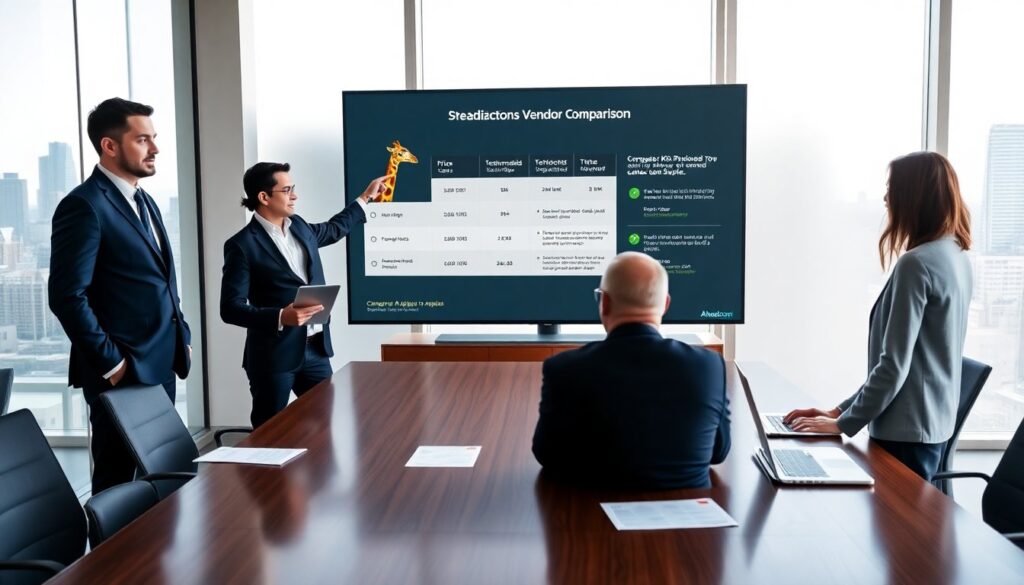
digital transformation giraffe comparing prices testimonials aheadiconi guides buyers in clear steps. The guide shows what buyers must check when they shop for platforms in 2026. It lists trends, a simple metaphor, price comparison rules, how to read testimonials, and how to benchmark Aheadiconi. The tone stays practical. The reader learns to spot value, avoid traps, and pick vendors with confidence.
Key Takeaways
- Digital transformation buyers in 2026 must prioritize interoperable APIs, continuous security updates, and industry-specific data models when evaluating platforms.
- The giraffe metaphor encourages organizations to extend planning horizons and modular skills to gain durable advantages in complex digital change.
- Use a clear framework to compare prices by separating direct costs, implementation efforts, and ongoing expenses to make smart vendor evaluations.
- Treat testimonials as initial signals and verify them through multiple references, case studies with measurable KPIs, and independent reviews to avoid marketing noise.
- Benchmark Aheadiconi by testing use cases, measuring performance against KPIs, and gathering customer references to ensure a strong fit and real value.
- Piloting vendors like Aheadiconi helps validate assumptions, reveal true costs, and improve procurement decisions with documented lessons.
The Digital Transformation Landscape In 2026: Key Trends And What They Mean For Buyers
Cloud-first delivery and edge computing drive more projects in 2026. Vendors focus on observable outcomes and faster time-to-value. Buyers face more choices and more modular offerings. Many vendors sell platform components instead of full suites. Buyers must prefer interoperable APIs and clear SLAs. They should expect continuous updates and built-in security. Industry-specific data models gain traction for faster deployment. Buyers should plan for incremental rollouts and measure business KPIs. Teams should keep vendor lock-in low and prioritize portability. This trend means buyers must compare not just features but upgrade paths and integration costs.
The Giraffe Metaphor: Why Stretching Your Capabilities Wins In Complex Digital Change
The giraffe metaphor shows why a long view helps in digital change. A giraffe reaches high leaves that others cannot reach. Organizations that extend skills and scope find new value. Leaders should stretch planning horizons and skills development. Teams should invest in learning and modular architecture. This approach reduces scramble during scale. It also lowers the chance of costly rework. The metaphor reminds buyers to weigh future reach and current fit. It pushes buyers to pick vendors that enable stretching without heavy rewrites. In short, stretching capability wins when buyers need durable advantage.
Comparing Prices: The Framework For Smart Vendor Evaluation
Buyers should break price comparison into clear buckets. The framework separates direct price, implementation effort, and follow-on costs. Buyers should compare normalized quotes that use the same usage assumptions. They should ask vendors for cost models and sample bills from similar customers. Buyers should score vendors on predictable spend and ease of scaling. They should test small pilots to validate assumptions. This framework helps buyers compare apples to apples and reveal long-term differences. It also helps them include non-price signals such as velocity and support response times.
Reading Testimonials And Social Proof: Signal Versus Noise
Buyers should treat testimonials as starting points, not proof. They should verify claims with multiple sources and ask for customer references. They should prefer case studies with measurable KPIs and timelines. Buyers should check platform marketplaces and independent review sites for repeat patterns. They should watch for stock phrases and vague outcomes. Buyers should ask how the vendor handled failures and scope changes. They should request references from buyers in similar industries. This approach converts testimonials into usable signals and reduces the impact of marketing noise.
Aheadiconi Benchmarking: How To Use Case Examples To Validate Fit And Value
Buyers should evaluate Aheadiconi by comparing similar use cases and metrics. They should ask Aheadiconi for performance data, integration examples, and time-to-value for peers. Buyers should test Aheadiconi in a limited production scenario to see real costs and outputs. They should request customer references that used Aheadiconi for matching goals. Buyers should map Aheadiconi outcomes to their KPIs and measure delta against alternatives. They should document lessons from pilots and update vendor scores. This method helps buyers validate fit and justify procurement decisions.